
Anna Liza Montenegro
MICROSOL RESOURCES, GRAITEC GROUP
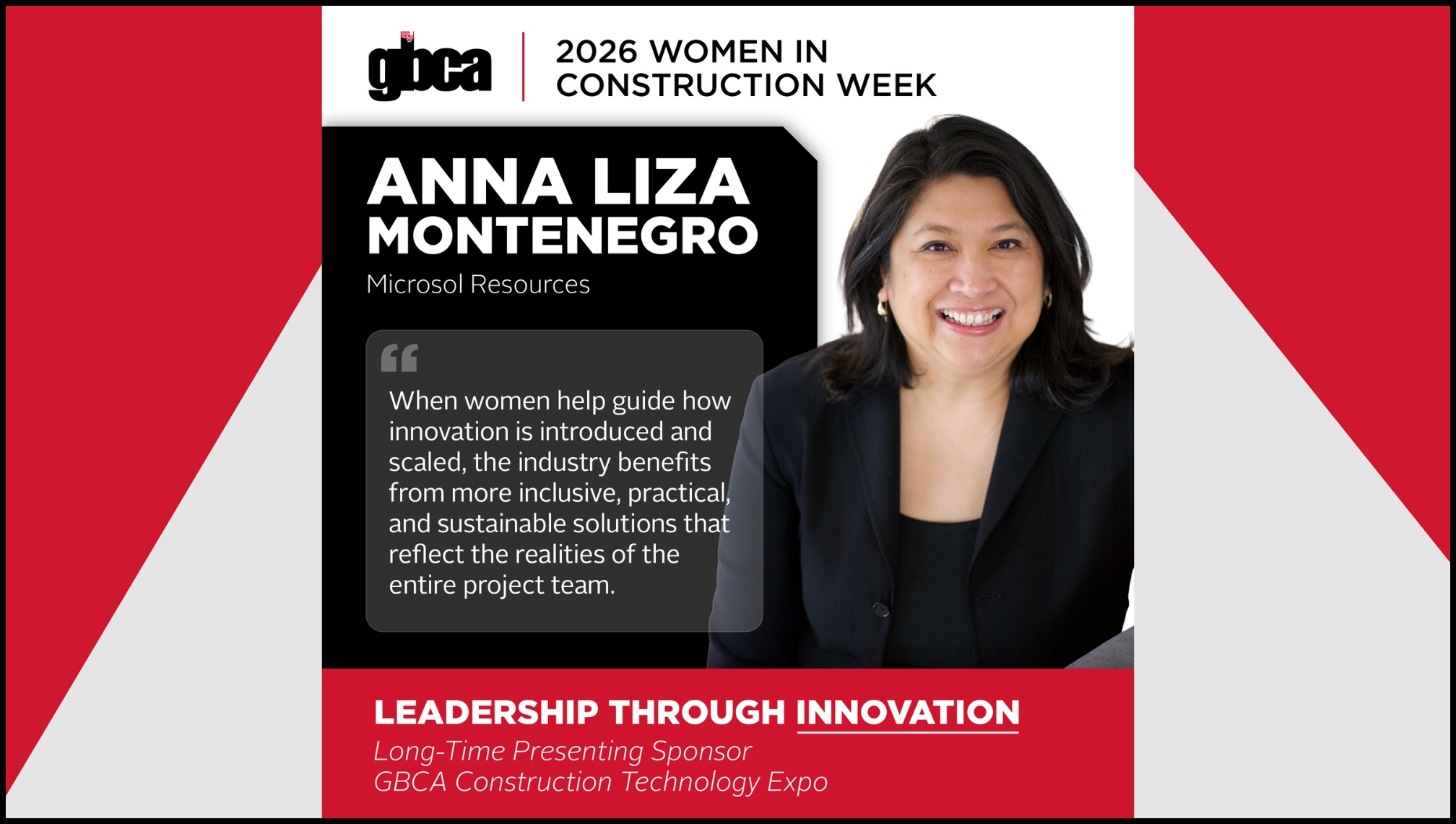
Long-Time Presenting Sponsor, GBCA Construction Technology Expo
Women in Construction Week 2026 | GBCA
As part of Women in Construction Week, GBCA is highlighting women who are advancing the union commercial construction industry through leadership, innovation, and long-standing involvement with GBCA initiatives.
Anna Liza Montenegro represents Microsol Resources (now part of Graitec), a long-time presenting sponsor of GBCA’s Construction Technology Expo. Through her work at the intersection of architecture, technology, and industry collaboration, Anna Liza brings a thoughtful, people-centered perspective to how construction innovation is introduced and adopted.
As a long-time presenting sponsor of GBCA’s Construction Technology Expo, how have you seen construction technology evolve, and why is it important for women to have a voice in shaping how innovation is adopted across the industry?
From my perspective at Microsol (now part of Graitec) as a technology solutions company and long-time Autodesk and Bluebeam partner, I’ve seen construction technology evolve dramatically. What started as siloed design and documentation tools has become a connected digital ecosystem that supports the entire project lifecycle. Early on, the goal was simply to digitize drawings and streamline documentation. Today, it’s about integration, data continuity, and using real-time insights to drive better decisions by linking design, estimating, construction, and operations to reduce risk and improve outcomes.
As a trained architect, that evolution is especially meaningful to me because I’ve lived through every phase of it. I’m an immigrant and I trained in architecture in the Philippines, at a time when everything was hand-drawn and entirely analog. Early in my career, I transitioned into CAD, and later into BIM as it emerged and matured. While my career trajectory eventually took me out of being hands-on in the design process and into the technology side of the business, I’ve had a front-row seat to how these tools have transformed the industry, and how they continue to evolve. I’ve seen how tightly design intent, constructability, and cost are intertwined, and how technology has progressively become the bridge between those disciplines.
Through hosting and speaking at industry events, I hear a consistent theme: the technology is powerful, but true success depends on thoughtful implementation, adoption, and cultural change. The tools alone don’t create value—how people use them does.
Why is it important for women to have a voice at the committee and decision-making level within organizations like GBCA?
This is also deeply personal for me. I now have a daughter who recently graduated as an architecture major from Carnegie Mellon University, so I truly have skin in the game when it comes to the future of this profession. I want to help ensure that the next generation of women architects and technologists enters an industry that is more inclusive, more equitable, and better equipped to use technology in meaningful ways.
That’s exactly why it’s so important for women to have a voice in shaping innovation across the industry. Women often bring a more holistic, human-centered perspective focusing not just on tools, but on workflows, collaboration, and how people actually work. Technology adoption is ultimately about people, not platforms. When women help guide how innovation is introduced and scaled, the industry benefits from more inclusive, practical, and sustainable solutions that reflect the realities of the entire project team, and not just a select few.